Salesforce Integration · Poughkeepsie

Salesforce integration consulting in Poughkeepsie.

Linking Salesforce with the order, inventory, invoicing and patient systems that Poughkeepsie-area plants, warehouses and clinics already run on.

4.95/5 from 92 AgentExchange reviews Salesforce Select partner since 2017 138 certifications, client case studies

Salesforce Integration for Poughkeepsie companies

Integration work in the Poughkeepsie metro usually starts with an ERP or warehouse system holding orders, inventory and invoices that sales and service teams cannot see. Ownership comes first: which platform is the master for customers, items, prices and invoices. Then we pick an API call, a nightly batch or a middleware route for each flow, and set alerts so a stuck order reaches a person before it reaches your customer. The aim is fewer logins and less re-keying, with Salesforce showing the operational facts people need.

Local industries

How integration plays out in Poughkeepsie.

Manufacturing

Factories produce about 5.7% of the metro's 2024 output, and both counties court advanced manufacturers. Manufacturers here commonly need Salesforce to show order status, shipment dates and open invoices from an ERP, and to send approved quotes back without re-entry. We design the product and price sync first, because catalog mismatches break every later step, then add order and service history so reps and technicians can answer customers without calling the plant.

Integration for Manufacturing →
Transportation, Logistics & Distribution

Large distribution centers in Fishkill and the Town of Montgomery show how much logistics work runs through this metro. For distributors and carriers, the integration question is what belongs in Salesforce at all. Account managers need shipment exceptions, volume trends and billing disputes; they do not need every scan event. We pull summarized data from warehouse and transportation systems on a schedule, open cases automatically for exceptions, and keep detailed tracking in the operational system where it belongs.

Health care and social assistance

Hospital systems and clinic groups in Dutchess and Orange counties rarely want Salesforce to duplicate the EHR. Integration for them means passing a limited set of fields, such as referral status, appointment dates or program enrollment, under a business associate agreement and with an audit trail. We document every field that crosses the boundary, restrict the integration user's access, and design retries so a failed message is noticed and resent instead of silently dropped.

Integration for Health & Life Sciences →
Plan for it

What to plan for in Poughkeepsie.

01

Name a system of record

Write down, per object, whether Salesforce or the ERP holds the master copy. Integrations fail slowly when two systems both believe they are authoritative, and the fix is a written ownership table rather than more synchronization logic layered on top.

02

Plan for integration errors

Every connection eventually meets a record it cannot process. Define who receives alerts, how failed messages are retried, and what users see when data is late, so a broken sync becomes a ticket someone owns rather than a gap discovered weeks later.

03

Size middleware to volume

Middleware is not automatically required. A mid-sized manufacturer with one ERP and modest order volume may be well served by native connectors or scheduled jobs, while several systems or high transaction counts justify an integration platform. We size the approach to your data, not to a favorite tool.

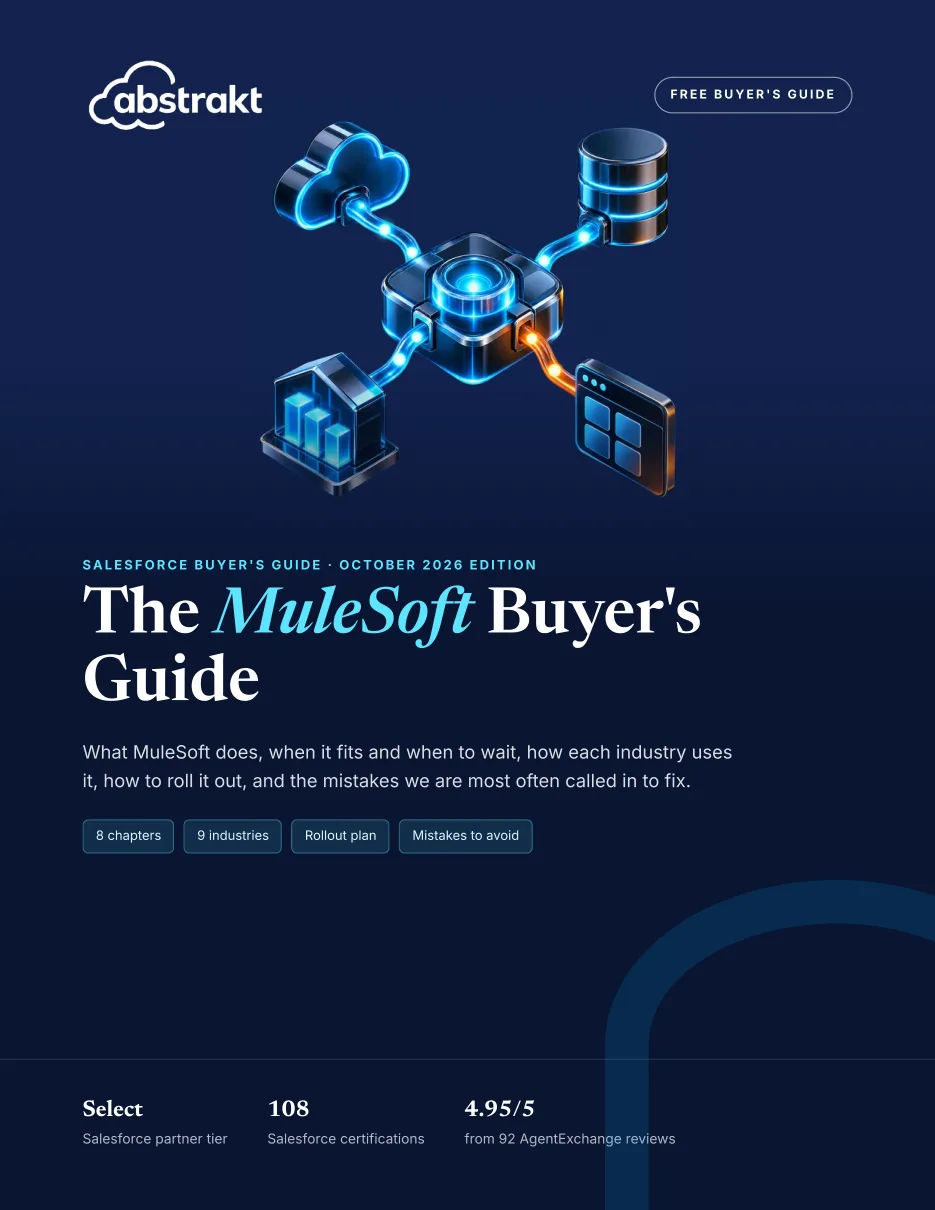
Free 21-page PDF

The MuleSoft Buyer's Guide

Connecting Salesforce to other systems at a Poughkeepsie-Newburgh company?What MuleSoft does, when it fits and when to wait, the rollout plan and the mistakes to avoid, free for Poughkeepsie-Newburgh teams like yours.

Get the guide →
Also freePoughkeepsie-Newburgh's Salesforce market brief23 pages on Poughkeepsie-Newburgh's growth, industry mix and tech talent costs, for planning integration work.
Scope

What our integration covers.

  • Integration design
  • ERP integration
  • Middleware
  • Marketing and support tools
  • Monitoring

How our salesforce integration works →

Salesforce products

FAQ

Integration in Poughkeepsie: questions.

Can Salesforce exchange data with the aging on-premise ERP at our Orange County plant?

Most ERPs used by Hudson Valley manufacturers and distributors expose APIs or file exports that Salesforce can work with, including cloud products and older on-premise systems. The harder questions concern data rather than connectors: whose customer numbers win, how often prices change, and what happens when an order is edited after it syncs. We work through those in design, then choose the connection method that fits.

Could our Hudson Valley dealers check their own orders instead of phoning us?

Yes. Once order and shipment data reach Salesforce, Experience Cloud can show it to customers or dealers based on their account, with no access to anyone else's records. Portals cut the volume of status calls for distributors and manufacturers, which frees service staff for real problems. We usually launch with order lookup and case submission, then add documents, invoices or reorder features later.

How do field technicians get equipment history if it lives in our ERP?

Field Service can display installed equipment, warranty status and past work orders once that data is synced from the ERP or asset system. Technicians see it on a mobile device before arriving on site, including offline where coverage is weak. Parts used and hours worked flow back so billing stays accurate. We decide together whether that return trip runs in real time or on a schedule.

Planning integration in Poughkeepsie? Let’s talk it through.

Tech Talk · monthly newsletter

Valuable insights on technology, CRM and AI, once a month.

Written by the consultants who do the work. One email a month, and you can unsubscribe anytime.

We never share your email. See past issues →

Call (314) 916-4095 Book a consultation
Call (314) 916-4095 Book a call