
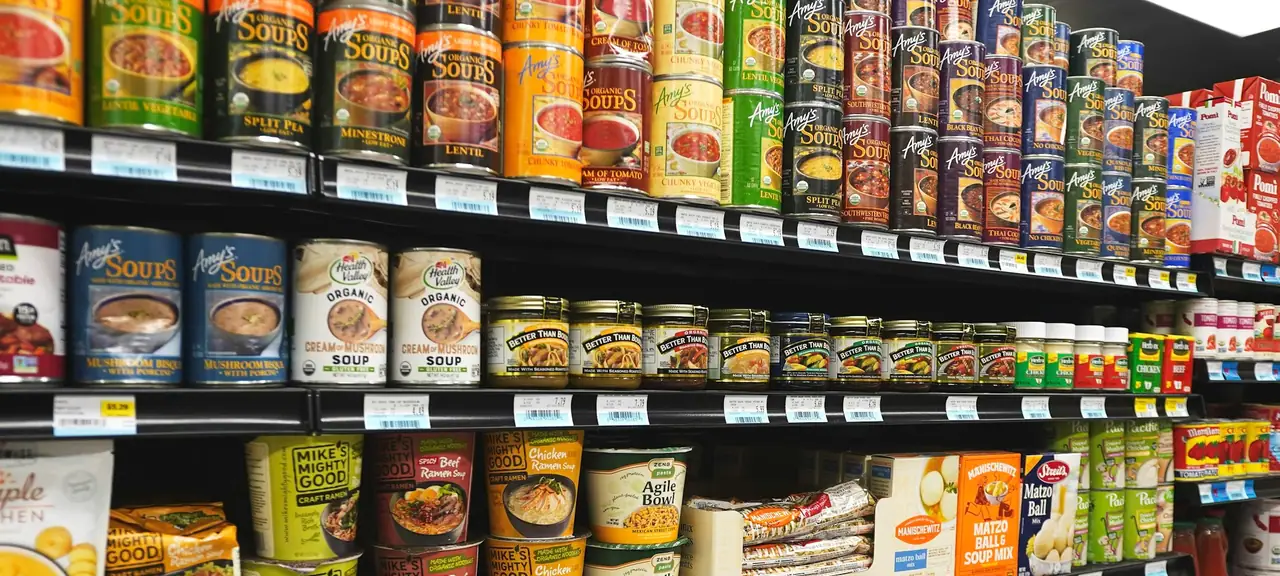
The Retail and Consumer Goods landscape
Start every account by asking how the company makes money. A retailer cares about traffic, conversion, basket size, loyalty and service cost. A consumer goods brand cares about distribution, trade spend, retail execution and sell-through, plus direct-to-consumer growth if it has a DTC channel. Many brands now run both models, which means two sets of buyers who may not talk to each other often.
- 01
Ownership is spread out.
Ecommerce or digital leaders usually own the storefront. Marketing owns email, loyalty and personalization. Customer service owns the contact center. In consumer goods, sales and trade marketing own key account plans and promotions, and finance cares deeply about trade spend accruals. IT and the CIO hold the integration map, which in this vertical includes ERP, order management, point of sale, warehouse and often several ecommerce platforms. Find out who controls the budget for each area before you build a multi-cloud story.
- 02
Salesforce has a specific product line for each side.
Commerce Cloud covers B2C Commerce, B2B Commerce, Order Management, Payments and point of sale. In July 2026 Salesforce announced general availability of three commerce agents: a Shopper Agent for discovery through checkout on the brand's storefront, a Buyer Agent for B2B buyers in WhatsApp and SMS, and a Merchant Agent for catalog and merchandising work. Consumer Goods Cloud covers Trade Promotion Management, Retail Execution and Distributor Management, with Agentforce add-ons for trade promotion and store visits.
- 03
Timing matters more here than almost anywhere.
Most retailers and brands freeze major system changes ahead of peak selling seasons, and the freeze can start months before the holidays. Learn the customer's calendar in the first meeting and build your close plan backward from it.
Who buys, and how to open with them (6)
VP of Ecommerce or Chief Digital Officer
Cares about: Conversion, site performance, average order value, speed of launching new experiences and owning the digital roadmap.
“"What is one experience you want on your site before next peak season that your current platform makes hard?"”
- Which commerce platform do you run today, and what do you spend on customization and upkeep?
- How do product discovery and search perform, and how do you measure it?
- Where do shoppers drop off between product page and order confirmation?
- How are you thinking about shoppers who arrive from AI assistants instead of search?
Chief Marketing Officer or VP of Loyalty
Cares about: Repeat purchase, customer lifetime value, personalization, consent and proving which campaigns drive sales.
“"How many versions of the customer do you have across ecommerce, stores, loyalty and email?"”
- How do you match an online shopper to the same person in stores or in your loyalty program?
- Which segments do you wish you could build but cannot today?
- How do you manage opt-outs and preferences across email and text messaging?
- How is your loyalty program run, and what does it cost to change a rule or tier?
VP of Customer Service
Cares about: Contact volume, cost per contact, where-is-my-order questions, returns and protecting the brand during peak.
“"What share of your contacts during peak are order status or return questions?"”
- How do agents see order, payment and loyalty data while helping a customer?
- How do you staff for seasonal spikes, and what happens to wait times?
- Which questions would you trust an AI agent to answer today, and which never?
VP of Sales or Key Account Director (consumer goods)
Cares about: Distribution gains, retailer relationships, joint business plans, order capture and forecast accuracy by account.
“"When you sit down with a key retailer for a business review, where does your data come from?"”
- How are account plans and joint business plans built and tracked today?
- How do field reps plan store visits and record what they see on the shelf?
- How do distributor orders and inventory reach your team?
- How do you forecast by account and product, and who trusts the forecast?
Trade Marketing or Revenue Management Leader (consumer goods)
Cares about: Promotion return, trade spend accuracy, accruals that match reality and fewer spreadsheet models.
“"How confident are you about which promotions made money last year and which only moved volume?"”
- Where do promotion plans, volume models and spend approvals live?
- How do accruals get calculated and matched to retailer deductions?
- How long after a promotion ends do you know whether it worked?
CIO or VP of Technology
Cares about: A manageable integration map, peak-season stability, security of payment and customer data and fewer vendors to manage.
“"Which system would you most like to retire in the next two years, and what keeps you from doing it?"”
- Which systems are the source of truth for product, inventory, orders and customers?
- When is your change freeze, and what work has to finish before it starts?
- How do you keep cardholder data out of systems that should not hold it?
The problems worth solving (7)
Customer data is split across channels
Ecommerce, stores, loyalty, service and marketing each hold their own version of the customer. Shoppers get irrelevant messages, service agents cannot see the full order history, and marketing cannot measure lifetime value across channels. Brands with both wholesale and DTC have it worse, because retailer data and shopper data rarely meet.
Where Salesforce fits: Data 360 resolves identities across devices, channels and anonymous sessions into real-time profiles, and can use warehouse data without copying it. Marketing, service and commerce then work from the same segments.
Order status questions flood the contact center
During peak, a large share of contacts are about where an order is, how to change it or how to return it. Agents bounce between screens to answer, wait times grow and seasonal staff take weeks to become effective. Customers notice the delay at the worst possible time.
Where Salesforce fits: Service Cloud with Order Management puts order data in the agent's view. Agentforce service agents and the Commerce Cloud Shopper Agent can handle routine questions, with handoff to people for exceptions.
Trade promotion return is a guess
Consumer goods companies spend heavily on promotions with retailers, but plans live in spreadsheets, volume models are hard to update and accruals rarely match the deductions that arrive later. Sales and finance argue about results long after the promotion ends, and next year's plan repeats the same mistakes.
Where Salesforce fits: Consumer Goods Cloud Trade Promotion Management covers promotional spend planning, volume modeling and financial governance, with liability accruals calculated in the platform. The Trade Promotion Management Agent adds AI help.
Retail execution is invisible
Field reps visit stores to check shelves, displays and pricing, but results come back as photos and notes that nobody analyzes. Managers cannot tell which stores need attention or whether the planned display went up. Visit routes are planned by habit instead of opportunity.
Where Salesforce fits: Consumer Goods Cloud Retail Execution gives reps mobile order capture, store audits and guided account playbooks. The Visit Assistant agent helps schedule visits, summarize accounts and suggest products.
The commerce platform slows the business down
Older or heavily customized storefronts make every new promotion, page or market a development project. Peak traffic creates performance worries, and the ecommerce team spends its budget on maintenance. B2B buyers, such as retailers reordering from a brand, are often still ordering by email or phone.
Where Salesforce fits: Commerce Cloud offers B2C and B2B Commerce on one platform, with Order Management and Payments. The Buyer Agent supports B2B ordering in WhatsApp and SMS, and the Merchant Agent helps teams manage catalogs in plain language.
Loyalty programs are rigid and disconnected
Many loyalty programs run on a separate platform where a new tier, promotion or partner takes months to launch. Points and status are not visible to service agents or store associates, so the program cannot make the customer feel known when it matters.
Where Salesforce fits: Salesforce Loyalty Management supports points, tiers and promotions on the same platform as service and marketing, so loyalty status appears where agents and associates work.
Distributor orders and inventory are hard to see
Brands that sell through distributors often learn about inventory and orders late, through files and emails. Out-of-stocks and excess stock both cost money, and the sales team cannot tell which distributors need help. Purchase orders and stock audits are handled manually across many partners.
Where Salesforce fits: Consumer Goods Cloud Distributor Management streamlines purchase orders, goods receipts and stock audits for better inventory accuracy. MuleSoft connects distributor feeds where needed.
The numbers leaders run on (7)
Conversion rate
Ecommerce leaders watch the share of sessions that become orders. Storefront and order data from Commerce Cloud show where shoppers stall and which experiences help.
Customer lifetime value and repeat purchase rate
Retention drives profit in most retail models. Unified profiles in Data 360 let marketing measure value across channels instead of one channel at a time.
Cost per contact and contact rate
Service leaders track both the cost of each contact and how many orders create one. Service Cloud case data and agent deflection rates show where self-service is working.
Trade promotion return
Consumer goods leaders want to know which promotions created profitable volume. Consumer Goods Cloud plans, accruals and results, analyzed in Tableau, make the comparison possible.
Perfect store or retail execution compliance
Brands score how often stores match the planned shelf, display and price. Store audit data from Retail Execution feeds this score by account, region and rep.
Forecast accuracy by account
Accurate forecasts reduce out-of-stocks and excess inventory. Account plans and order history in Salesforce, connected to ERP, improve the inputs.
Loyalty engagement
Leaders watch active members, redemption and tier movement to judge program health. Loyalty Management data shows which promotions change behavior.
Product fit (8)
Cross-sell sequence (5)
- Service Cloud Agentforce and Order ManagementThe service leader says order status and return questions dominate peak volume.
- Marketing Cloud Data 360Marketing cannot match online shoppers to store or loyalty customers, or segment builds take days.
- Consumer Goods Cloud Retail Execution Trade Promotion ManagementFinance and sales argue over promotion results, or accruals rarely match retailer deductions.
- B2C Commerce B2B CommerceRetailer or wholesale customers still reorder by email, phone or spreadsheet.
- Data 360 Loyalty ManagementThe loyalty program runs on a separate platform and changing a tier or promotion takes months.
Objections, and what to say (6)
"We just replatformed our ecommerce site. We are not doing that again."
Respect it and change the entry point. You do not need to replace the storefront to help. Data 360, Service Cloud with order context, Marketing Cloud and Agentforce service agents can all connect to the commerce platform they already have. Ask where the new site still falls short: service, personalization, loyalty or B2B ordering. Lead with the gap they feel now and leave commerce for a later conversation.
"Shopify is cheaper and our team knows it."
Many brands run Shopify well, and the abstraktsolutions.com retail page covers Shopify Plus integration. Ask what is breaking as they grow: multiple brands or regions, B2B ordering, complex service needs or customer data spread across tools. Often the right answer is Salesforce for service, marketing, data and agents alongside the existing storefront. Fight the battle you can win and keep the relationship for the commerce decision later.
"We can't start anything before peak season."
Agree, and use the time. Peak freeze is real, so plan discovery, design and contracting during the freeze and build after it lifts. Ask when the freeze starts and ends, then write a timeline that goes live well before the next one. A health check or data readiness assessment during peak gives the team useful work without touching production systems.
"Our trade promotion process is too complex for a standard tool."
Ask them to show you the spreadsheet. Complexity usually comes from exceptions and manual workarounds, not from requirements that no system can meet. Consumer Goods Cloud covers spend planning, volume modeling, financial governance and liability accruals. Propose a scoped proof with one retailer or one category so finance and sales can compare results with their current model before committing to a full rollout.
"An AI agent could damage our brand."
That concern is fair, and it should shape the scope. Start with questions that have clear, factual answers, such as order status, return policy and store hours, and keep a person in the loop for anything sensitive. Agents should be grounded in the brand's own catalog and policies, and Salesforce documents how the Einstein Trust Layer handles data. Agree on review steps and success measures before the agent talks to a single customer.
"Our ERP vendor offers this already."
ERP is strong at inventory, finance and supply chain. Ask how well it handles shopper personalization, service conversations, loyalty and field sales. Position Salesforce as the customer-facing layer that integrates with the ERP rather than replacing it. Bring the SAP, Oracle or Microsoft battlecard depending on which ERP they run, and an integration diagram the CIO can react to. Most CIOs prefer a clear split of duties.
Implementation watch-outs to raise before signature (5)
Plan around the change freeze
Retail and consumer goods teams usually lock down systems before peak selling periods. Confirm the freeze dates before you sign, and plan go-live with enough time for testing and a stable period before the freeze. Missing the window can push a project back by most of a year.
Keep payment card data out of CRM
PCI DSS applies to companies that store, process or transmit cardholder data. Design service and commerce flows so card numbers never land in case notes, chat transcripts or custom fields. Use tokenized payment references and involve the customer's security team early. Do not tell a customer that a product makes them compliant.
Respect consent across email and text
Combining customer lists from ecommerce, stores and loyalty can mix records with different consent. Carry opt-outs and preferences forward during migration. CAN-SPAM requires honoring email opt-outs within 10 business days, and text messaging programs carry their own consent rules, so involve the customer's counsel.
Size for data volume and peak traffic
Order history, product catalogs and clickstream data can be very large. Decide what lives in Salesforce, what stays in the warehouse and is accessed through Data 360, and what is summarized. Load test service and commerce flows against peak volumes, not average days.
Get master data right first
Product, store, account and pricing data feed every use case, from storefront to trade promotions. If ERP and product information systems disagree, Salesforce will show the disagreement to customers and reps. Agree on sources of truth and fix key data before configuration starts.
Qualify honestly
Strong fit
- A named executive sponsor with a clear goal, such as lower service cost, higher repeat purchase or better trade spend return.
- The customer has shared its peak calendar and change freeze dates.
- The CIO or integration owner has joined discovery and shared the system map.
- There is a measurable baseline, such as contact volume, promotion results or loyalty engagement, to build the business case.
- A first phase is scoped to one brand, region, channel or category.
Risky fit
- The project depends on replacing a storefront that was just relaunched.
- Go-live is expected right before a peak season freeze.
- Marketing, ecommerce and service each want a different first phase and nobody can choose.
- Product and pricing data have no clear owner.
Questions (4)
When should I lead with Consumer Goods Cloud instead of Commerce Cloud?
Lead with Consumer Goods Cloud when the buyer is a brand that sells through retailers and distributors and the pain is trade promotions, field visits or distributor orders. Lead with Commerce Cloud when the pain is the storefront, B2B reordering or order management. Many brands need both, but rarely in the same first phase.
Which Commerce Cloud agents are available?
In July 2026 Salesforce announced general availability of the Shopper Agent, Buyer Agent and Merchant Agent. Integrations with ChatGPT, Google Search and the Gemini app were described as arriving in the following months, so confirm current status before promising them.
Can Salesforce work with a storefront the customer already runs?
Yes. Data 360, Service Cloud, Marketing Cloud and Agentforce can connect to other commerce platforms through APIs and MuleSoft. That is often the fastest path into a retailer that is not ready to replatform.
What can Abstrakt bring to a retail deal?
Abstrakt has been a Salesforce partner since 2017 with 138 certifications. Its retail and consumer goods page covers Consumer Goods Cloud, Data 360, Marketing Cloud and Commerce Cloud work. It replies to AE requests within four business hours and offers a free health check for customers you refer.
Sources (9)
- Salesforce Consumer Goods Cloud
- Salesforce Commerce Cloud
- Salesforce for Retail
- Salesforce press release: Agentforce Commerce release, July 6, 2026
- Salesforce Data 360
- Salesforce Loyalty Management
- PCI Security Standards Council: PCI DSS
- FTC: CAN-SPAM Act compliance guide for business
- Salesforce Help: Trust and Agentforce