Salesforce Integration · Fayetteville

Salesforce integration consulting in Fayetteville.

Integration for Northwest Arkansas producers, carriers and wholesalers that need orders, loads, specifications and retailer data flowing between Salesforce and operational systems.

4.95/5 from 92 AgentExchange reviews Salesforce Select partner since 2017 138 certifications, client case studies

Salesforce Integration for Fayetteville companies

Integration projects in Northwest Arkansas usually connect Salesforce to systems that run the supply chain: ERP for orders, pricing and deductions, transportation management for loads and lanes, quality systems for specifications and claims, and retail data feeds for sell-through. We define which system owns each piece of data, choose MuleSoft or a lighter tool depending on how many connections are needed, and build monitoring so failures are caught quickly. Retailer data is summarized before it reaches Salesforce, keeping the org fast.

Local industries

How integration plays out in Fayetteville.

Manufacturing

Manufacturing accounts for roughly 7.9% of 2024 metro GDP, led by food production and supported by the Council's advanced manufacturing, aerospace and defense targets. Producers need Salesforce linked to ERP for orders and pricing and to quality systems for lot numbers, specifications and claims. We integrate those so sales sees open claims and order history on each account, while plant systems remain the authority on production, inventory and lot traceability.

Integration for Manufacturing →
Logistics

Carriers, brokers and 3PLs, part of the logistics sector the NWA Council targets, keep load, lane and billing data in a transportation management system. Integration brings load history, on-time performance, open exceptions and billing disputes onto the shipper account in Salesforce. Service reps answer inquiries from one screen, and sales can see which lanes perform before rebidding. Carrier onboarding documents can also flow through an Experience Cloud portal into the right records.

Wholesale trade

Suppliers to large retailers rely on retailer portal, point-of-sale and deduction data that arrives from outside Salesforce every day. Integration lands that data in Data 360 (formerly Data Cloud) or a warehouse, summarizes it by account, category and item, and surfaces trends on the account record. Deductions from ERP appear alongside promotions, so account managers can reconcile disputes with context instead of chasing figures across several systems before every conversation with the buyer.

Plan for it

What to plan for in Fayetteville.

01

Summarize retailer data before loading

Daily item-by-store sales data can reach volumes Salesforce is not built to hold. Aggregate it by week, category or item in Data 360 (formerly Data Cloud) or a warehouse, and bring only the summaries account managers need into CRM records, keeping pages fast and storage predictable.

02

Align item and customer masters

Integrations fail when item numbers, customer IDs or units of measure differ between ERP, the quality system and Salesforce. Agree a master for each and map the exceptions before building, then test with real orders that include unusual or discontinued items.

03

Plan for API limits and peaks

Order and load volumes can spike around promotions and seasonal peaks. Design integrations with batching, queues and retries, check Salesforce API limits against peak volume, and alert a named owner when a sync falls behind, well before users notice missing data.

Free 21-page PDF

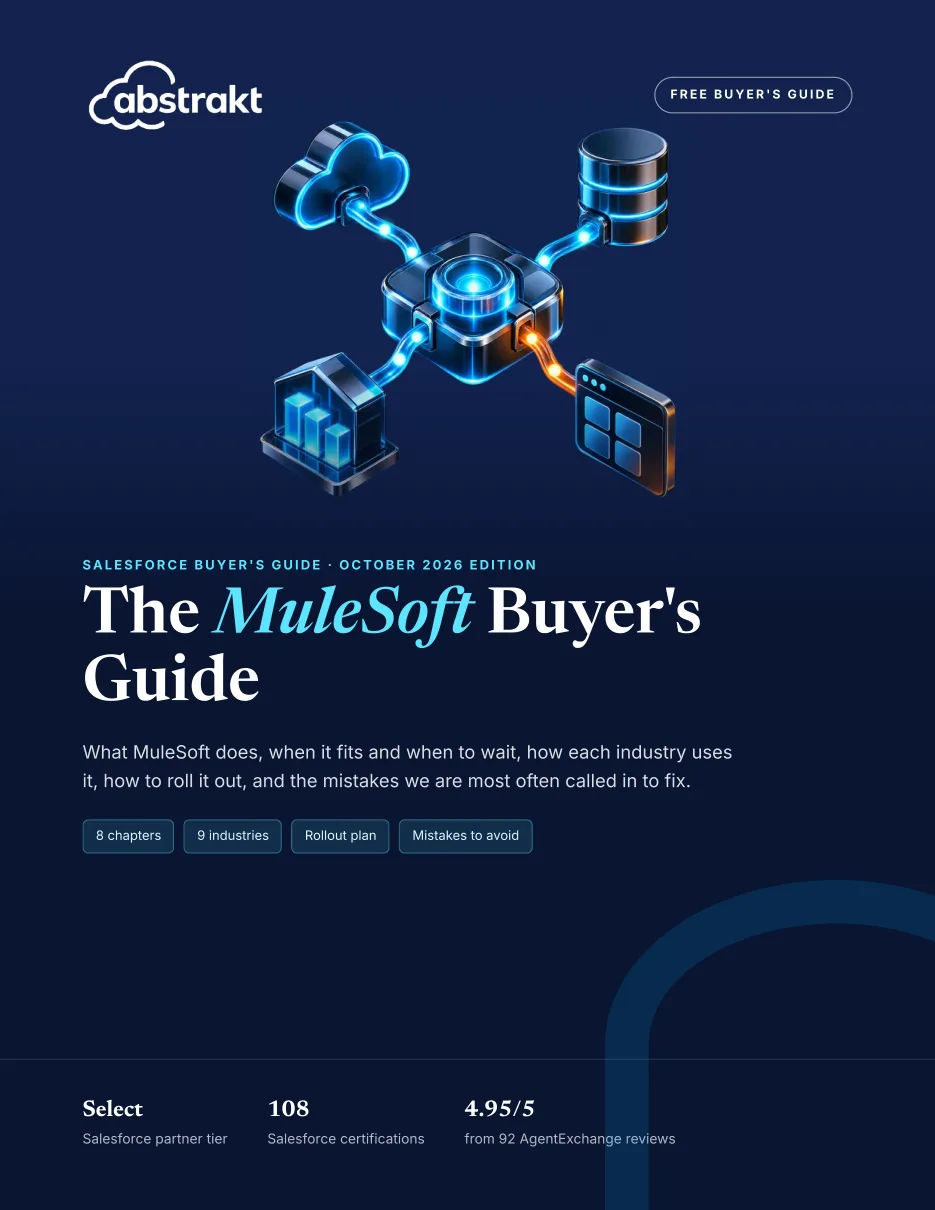
The MuleSoft Buyer's Guide

Connecting Salesforce to other systems at a Fayetteville company?What MuleSoft does, when it fits and when to wait, the rollout plan and the mistakes to avoid, free for Fayetteville teams like yours.

Get the guide →
Also freeFayetteville's Salesforce market brief22 pages on Fayetteville's growth, industry mix and tech talent costs, for planning integration work.
Scope

What our integration covers.

  • Integration design
  • ERP integration
  • Middleware
  • Marketing and support tools
  • Monitoring

How our salesforce integration works →

Salesforce products

FAQ

Integration in Fayetteville: questions.

Can Salesforce show our Northwest Arkansas account managers retailer sell-through data?

Yes, in summarized form. We bring retail data feeds into Data 360 (formerly Data Cloud) or your data warehouse, aggregate them by item, category and week, and display trends on the account and in dashboards. Account managers see sell-through, inventory and promotion lift without downloading files. Detailed analysis remains possible in the warehouse or in Tableau for the analysts who need item-by-store detail.

How should a Lowell-area carrier connect its TMS to Salesforce?

Start with shipper accounts and load history, since that gives sales and service the most value quickly. Loads, lanes, on-time performance and open exceptions flow from the TMS to Salesforce, while bid results and new shipper setups can flow back. MuleSoft suits carriers with several systems to connect; a single TMS connection can often use a lighter tool. Monitoring and error alerts are built in from the start.

Our food plant's quality system holds specifications and lot data; should that move into Salesforce?

Usually not in full. The quality system should stay the authority for specifications, lots and test results. Integration brings summaries into Salesforce, such as current specification versions per customer and open claims with lot references, so sales and service see what they need. Changes to specifications still go through your quality approval process, with status reflected back in Salesforce.

Planning integration in Fayetteville? Let’s talk it through.

Tech Talk · monthly newsletter

Valuable insights on technology, CRM and AI, once a month.

Written by the consultants who do the work. One email a month, and you can unsubscribe anytime.

We never share your email. See past issues →

Call (314) 916-4095 Book a consultation
Call (314) 916-4095 Book a call