Salesforce Integration · St. Louis

Salesforce integration consulting in St. Louis.

Salesforce integration for St. Louis distributors and manufacturers whose orders, pricing and inventory live in an ERP that sales cannot see.

4.95/5 from 92 AgentExchange reviews Salesforce Select partner since 2017 138 certifications, client case studies

Salesforce Integration for St. Louis companies

Integration work in St. Louis is dominated by ERP connections. The region's distributors and manufacturers typically run orders, pricing, inventory and invoicing outside Salesforce, so the job is deciding which system owns each record and how quickly changes must flow. We map those ownership rules, pick an integration approach that fits your data volumes and IT team, build and test in a sandbox and add monitoring so failed syncs are caught early. Our St. Louis-based consultants can sit with your ERP and IT staff while the mappings are worked out.

Local industries

How integration plays out in St. Louis.

Wholesale trade

Distribution businesses, which BEA counts at a floor of 7.5% of 2024 regional output, feel ERP gaps first. For distributors, the integration that matters most brings customer-specific pricing, open orders, back-orders and invoice status from the ERP into the account record. Reps then answer customer questions without calling the warehouse. We also send new accounts and quotes back to the ERP under clear rules, so customer data is not keyed twice or allowed to drift apart. Credit holds become visible too.
Manufacturing

Manufacturers need Salesforce to reflect what the plant can actually deliver. Common integrations pull product catalogs, lead times and installed-equipment records from ERP or production systems, and push signed agreements and forecasts back for planning. Where field technicians service equipment, Field Service needs parts and warranty data from the same source. We design those flows around the few records that must be exact and keep everything else on a slower schedule.

Integration for Manufacturing →

Pharmaceuticals & Medical Devices

Greater St. Louis, Inc. names pharmaceuticals and medical devices as one of its target sectors. Companies in this space connect Salesforce to quality, complaint-handling and order systems, often under validation and privacy requirements. Integrations for them need an audit trail showing what data moved and when, limits on which fields leave regulated systems at all and error handling that raises problems to a named owner instead of failing silently. We document each flow for quality reviewers.

Integration for Health & Life Sciences →
Plan for it

What to plan for in St. Louis.

01

Name a system of record

For each shared object, such as customers, products, prices and orders, agree which system is authoritative and which only displays a copy. Most integration failures we are asked to fix trace back to two systems both believing they own the same field.

02

Match sync speed to need

Timing can reasonably differ by record type. Order status might sync in near real time while product catalogs update overnight. Choosing the right timing for each flow keeps API usage, cost and troubleshooting effort in proportion to the business value.

03

Budget for monitoring and ownership

Integrations need someone watching them after launch. Decide who receives error alerts, who fixes rejected records and how failures are logged, whether that is your IT staff or a managed services partner, before the first connection goes live. Clear runbooks shorten every outage.

Free 21-page PDF

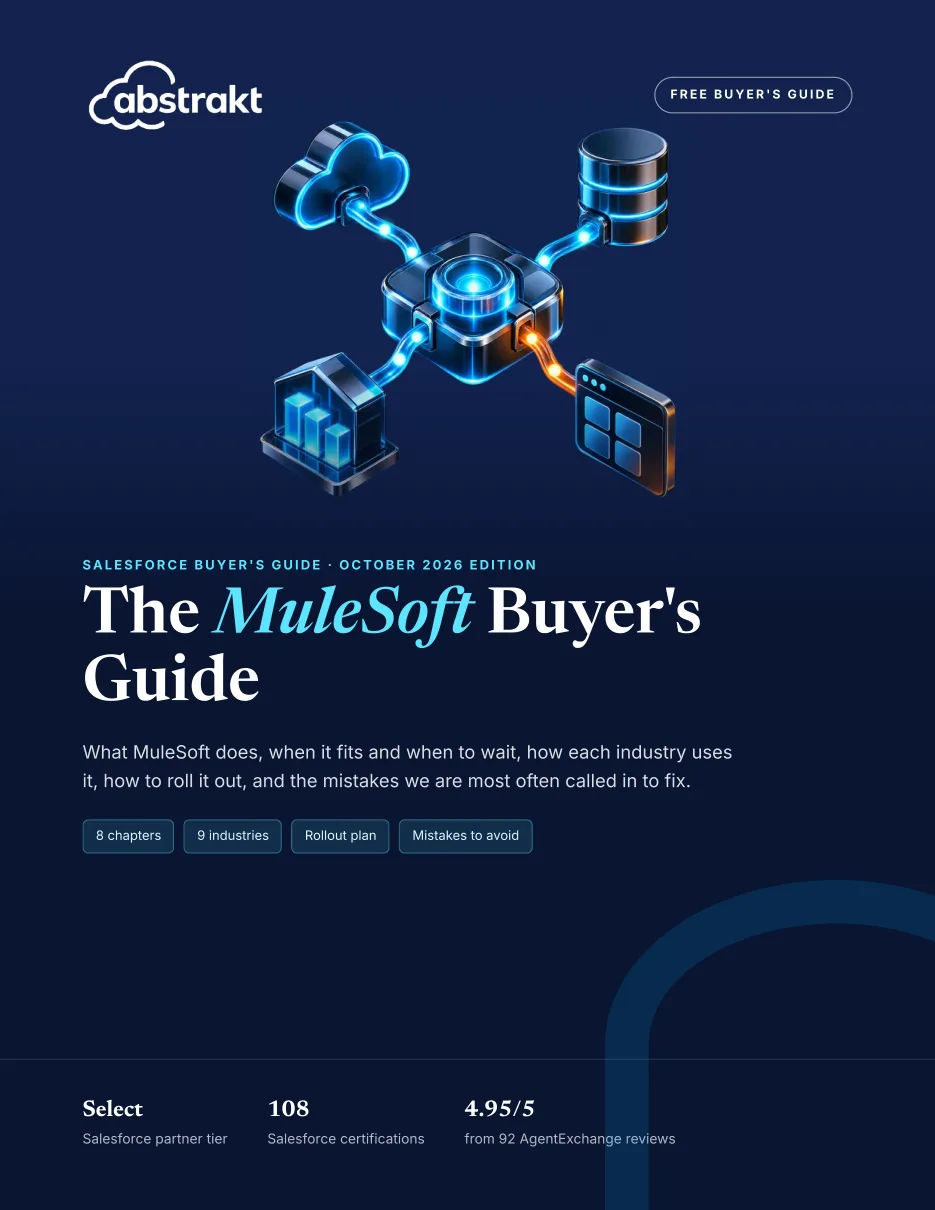
The MuleSoft Buyer's Guide

Connecting Salesforce to other systems at a St. Louis company?What MuleSoft does, when it fits and when to wait, the rollout plan and the mistakes to avoid, free for St. Louis teams like yours.

Get the guide →
Also freeSt. Louis's Salesforce market brief24 pages on St. Louis's growth, industry mix and tech talent costs, for planning integration work.
Scope

What our integration covers.

  • Integration design
  • ERP integration
  • Middleware
  • Marketing and support tools
  • Monitoring

How our salesforce integration works →

Salesforce products

FAQ

Integration in St. Louis: questions.

Our plant runs an older ERP. Can Salesforce still connect to it?

The pattern matters more than the brand. Most ERPs used by manufacturers and distributors in the region expose APIs or support middleware, and our team has built ERP connections for both manufacturers and life-sciences companies. We choose between MuleSoft, other integration platforms and direct custom connections based on how many systems you run, your data volumes and who on your staff will maintain the connections.

Should Salesforce or our ERP own customer and pricing data?

For most distributors and manufacturers, the ERP owns pricing, credit terms and invoices, while Salesforce owns prospects, opportunities and sales activity. Customer accounts are the tricky case: they often start in Salesforce and become official once the ERP assigns an account number. We document the rule for each field during design so both systems stay consistent after launch.

What happens when an integration between Salesforce and our ERP fails?

A well-built integration fails visibly rather than silently. Errors are logged with the record and payload involved, retried automatically where that is safe, and routed to a named person when they are not. Totals for orders and accounts are reconciled between the two systems on a schedule, which exposes gaps early rather than when a rep spots a missing order. Monitoring dashboards show volume and failure trends, and documented runbooks let your IT staff resolve common errors without waiting on anyone.

Planning integration in St. Louis? Let’s talk it through.

Tech Talk · monthly newsletter

Valuable insights on technology, CRM and AI, once a month.

Written by the consultants who do the work. One email a month, and you can unsubscribe anytime.

We never share your email. See past issues →

Call (314) 916-4095 Book a consultation
Call (314) 916-4095 Book a call